
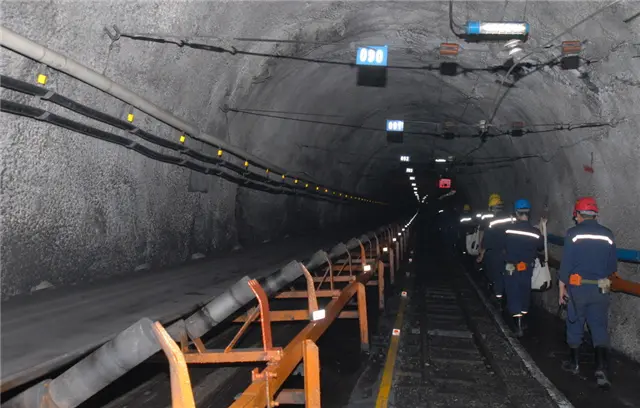
In coal mines, main belt conveyors installed in steeply inclined main inclined roadways often experience coal overflow, spillage, and falling coal during transportation. This is particularly evident when transporting raw coal with high moisture content, where daily coal spillage can reach tens to hundreds of tons. The spilled coal must be cleaned up, which affects operational efficiency and safety. To address this, a water storage tank is installed at the head of the belt conveyor to clean the spilled coal. During operation, the gate valve of the water storage tank is manually opened to flush the floating coal to the tail of the conveyor, where it is cleaned up by a loader. However, due to the large volume of flushing water, excessive floating coal, untimely cleanup, and the proximity of the floating coal to the sump, the floating coal is often directly flushed into the sump. As a result, the sump requires cleaning once a month, leading to issues such as high labor intensity, difficulty in sump cleaning, and significant safety hazards.
1 Analysis of Coal Spillage Causes
1.1 Main Causes of Coal Spillage
First, the large inclination angle and high speed of the conveyor; second, uneven surfaces at multiple points along the conveyor body, causing “belt floating” and resulting in coal spillage.
1.2 Difficulties in Sump Cleaning
First, the manually opened gate valve of the water storage tank often has an arbitrary opening degree, leading to excessive flushing water volume. On average, 800 m³ of coal slurry water is flushed into the sump each time. Second, the uneven floor of the main belt conveyor roadway causes floating coal to accumulate in low-lying areas without timely sedimentation, allowing water to carry the floating coal into the sump and resulting in frequent cleaning. Third, floating coal at the tail of the conveyor is not cleaned up promptly or thoroughly, causing it to be flushed into the sump during flushing operations. Fourth, the short distance between the tail of the main belt conveyor and the sump allows coal slurry water with insufficient sedimentation to enter the sump. Fifth, the floating coal contains a significant amount of large chunks, making it difficult for the walking excavator (equipped with a mud pump) to collect material efficiently at the front end during sump cleaning. This results in low efficiency, severe wear of the mud pump, and necessitates manual or loader-based cleaning at the front end of the sump, leading to high labor intensity and low cleaning efficiency.
2 Design of a Comprehensive Coal Spillage Treatment System for Belt Conveyors
2.1 Scheme Research and Measures
(1) While the steep inclination angle of the belt conveyor cannot be altered, its operating speed can be adjusted based on the coal volume. The solution involves installing a belt scale at the feeding source to monitor the coal volume and provide real-time feedback to the control system. This allows for adjusting the operating speed of the main belt conveyor to reduce speed and minimize coal spillage.
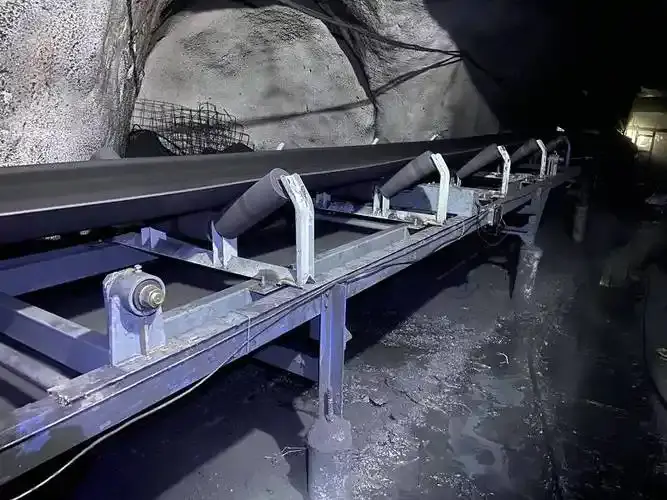
(2) To address the issue of “belt floating” caused by uneven surfaces at multiple points along the conveyor body, measures include adjusting both the conveyor body and the roadway to ensure the belt runs in a straight line. Additionally, pressure roller devices are installed to resolve the “belt floating” issue and reduce coal spillage.
2.2 Automatic Cleaning System at the Tail End Using a Loader
(1) A roller screen and a high-frequency vibrating screen are installed at the tail end of the belt conveyor. The roller screen automatically collects and classifies the spilled coal. The undersized material is flushed by water to a scraper-type sump cleaner, while the oversized material is conveyed to the high-frequency vibrating screen. Via a transfer belt conveyor, the material is sent back to the main belt conveyor. The undersized material from the high-frequency vibrating screen flows by gravity to the scraper-type sump cleaner.
(2) The coal slurry water flows by gravity to the scraper-type sump cleaner, where coarse particles larger than 0.5 mm are directly discharged onto the transfer belt conveyor. The overflow water from the scraper-type sump cleaner flows by gravity into a sedimentation tank.
(3) A rail and an electric hoist are installed above the sedimentation tank. A heavy-duty forced sludge pump with agitation is placed inside the sedimentation tank and moves back and forth to transport the sludge settled at the bottom to a high-pressure filter press. After filtration by the high-pressure filter press, the coal cake is discharged onto the transfer belt conveyor, while the filtrate water flows by gravity into the sump.
2.3 Features of the Comprehensive Coal Spillage Treatment System
(1) The system automatically controls the operating speed of the main belt conveyor to reduce coal spillage and address the “belt floating” issue. It intelligently controls the gate valve of the water storage tank, reducing the volume of flushing water. The installation of ultra-high molecular weight polyethylene plates on the roadway floor further decreases the required flushing water volume. The flushing water volume per operation is reduced to 200 m³, a 75% decrease, lowering the difficulty of sump cleaning and the mine’s drainage volume.
(2) The roller screen at the tail end comprehensively collects, classifies, and conveys the material, grading coarse particles larger than 10 mm. The undersized material flows by gravity to the scraper-type sump cleaner.
(3) The high-frequency vibrating screen dehydrates the coal, reducing the moisture content of the lump coal. This facilitates transportation on the steeply inclined main belt conveyor and reduces coal spillage.
(4) Coal slurry flows by gravity into the scraper-type discharge unit within the settling tank. Through its internal honeycomb inclined plate settling device. Coarse coal particles larger than 0.5 mm are graded and discharged via a scraper discharge device onto the transfer belt conveyor. The overflow water from the scraper-type sump cleaner flows to the rear sedimentation tank. The scraper-type sump cleaner handles coarse coal particles larger than 0.5 mm, resolving issues such as filter cloth wear and “layered” filter cakes in the high-pressure filter press.
3 Benefits and Value
3.1 Economic Benefits
(1) The system enables unmanned operation underground, reducing staffing by 20 people and saving approximately CNY 4 million in annual labor costs.
(2) The scraper-type sump cleaner operates automatically with start-stop cycles of 1-2 hours per cycle and a runtime of only 2 minutes per operation, resulting in low energy consumption. Compared to traditional dredging equipment, it saves about CNY 1 million in electricity costs annually.
(3) With this system, only fine particles enter the sump. These are efficiently pumped out using multistage pumps without clogging or pump burnout, reducing maintenance costs by approximately CNY 1 million per year.
3.2 Social Benefits
The system replaces manual cleaning, reducing labor intensity for workers and improving dredging efficiency. By preprocessing coarse particles, it minimizes wear and tear on subsequent mud pumps and multistage pumps, lowering pump failure rates and extending their service life. Real-time cleaning increases the effective capacity of the sump, eliminates the need for standby sumps, and enhances flood resistance. With centralized control from the surface and unmanned underground operations, safety hazards are significantly reduced, delivering remarkable social benefits.
4 Conclusion
The comprehensive coal spillage treatment system for the main belt conveyor is simple, practical, reliable, and easy to operate and manage. Its successful application has effectively addressed the challenges of cleaning coal spillage on steeply inclined main belt conveyors and dredging the rear sump. The system not only improves operational efficiency but also resolves underground safety hazards, demonstrating significant potential for broad promotion and application.
Post time: Sep-22-2025


